Does Steam publish the revenue?
No. Steam shows store information and account-specific purchase controls, but it does not publish a public revenue dashboard for this app.
Sales and revenue source check
Search interest around Scary Game 2 revenue is real, but the exact income for The Mad Shepherd is not published by Steam. This guide separates official store facts, public database signals, third-party estimates, and claims that should stay unquoted until a stronger source appears.
Checked on 2026-07-09. ScaryGame2.blog is an independent fan wiki; it does not publish private sales data or claim official financial access.
The useful answer is not a made-up dollar total. Readers need to know which facts are public, which signals are estimates, and which shortcuts are unsafe.
Steam does not expose a live revenue total for Scary Game 2: The Mad Shepherd.
The Steam page can confirm price, discount state, release context, developer, publisher, media, and supported systems.
SteamDB-style pages can help with app identity and public metadata, but they are not the studio's accounting ledger.
Third-party revenue or owner estimates may be useful for research, but they should be labeled as estimates.
Do not cite exact income, exact copies sold, or a studio profit number unless a first-party source confirms it.
Use this page to decide whether a revenue claim is worth quoting, ignoring, or treating as a lead.
If you only need the bottom line, start here before opening estimate sites or video snippets.
No. Steam shows store information and account-specific purchase controls, but it does not publish a public revenue dashboard for this app.
Only directionally. A cautious estimate needs price, discount timing, possible owner ranges, refunds, regional pricing, and platform fees, and each variable adds uncertainty.
Exact revenue, exact sales, net profit, or developer payout claims are unsafe unless they come from KanGames, Valve-facing official material, or another clearly first-party source.
It helps editors and players classify revenue search results without spreading fake financial screenshots, cracked-build claims, or unsupported viral numbers.
Use the table before quoting any Scary Game 2 sales or revenue number. A source can be useful without being strong enough for an exact claim.
| Source type | Can support | Cannot prove |
|---|---|---|
| Official Steam listing | Current store identity, price or discount state, developer/publisher metadata, release context, screenshots, achievements, and requirements. | Total revenue, copies sold, refunds, net profit, or developer payout. |
| SteamDB and public app databases | App ID, public metadata history, update context, depots, public package hints, and a second check for store identity. | Private sales, exact income, exact owner count, or accounting records. |
| Third-party estimate sites | A directional lead when they disclose methodology or owner-range assumptions. | An official number. Treat every dollar total as an estimate unless the studio confirms it. |
| Videos, comments, mirrors, and piracy pages | Usually only search-demand or discussion context. | Reliable revenue, safe download links, official financial information, or developer statements. |
A revenue estimate usually starts with a public price and then tries to infer how many people bought or own the game. That sounds simple, but an indie Steam title can have launch discounts, regional prices, bundles, refunds, tax handling, platform fees, creator copies, review keys, wishlists that never convert, and players who buy long after release. Those variables mean a clean-looking single number is rarely clean underneath.
For Scary Game 2: The Mad Shepherd, the strongest public source remains the official Steam app page because it confirms the entity. If a revenue post is talking about a different horror game, a fake APK, a cracked build, or a generic two-player scary game, it is not evidence for this title. First match the app name and app ID, then compare the source's claim against the store context.
SteamDB-style metadata is useful as a second layer. It can make app identity, supported systems, and public update context easier to scan. It can also help catch stale snippets that confuse developer names or release status. But a public database is still not the developer's private accounting system, so it should not be used as the only proof for exact revenue.
Third-party estimate pages should be read as hypothesis generators. If a page gives an owner range, sales range, or revenue estimate, look for the date, country or global scope, price assumption, whether discounts are considered, and whether gross revenue is being confused with net developer revenue. If those assumptions are missing, the page can be a research lead but not a citation for a precise number.
The safest editorial wording is therefore cautious: say that exact revenue is not publicly verified, explain which public signals exist, and link readers to official store or database sources for live context. This keeps the page useful for searchers without pretending that a fan wiki has access to private sales records.
Official screenshots are better for gameplay pages, but a revenue page needs source literacy more than copied store art. These visuals are labeled editorial explainers, not official media.
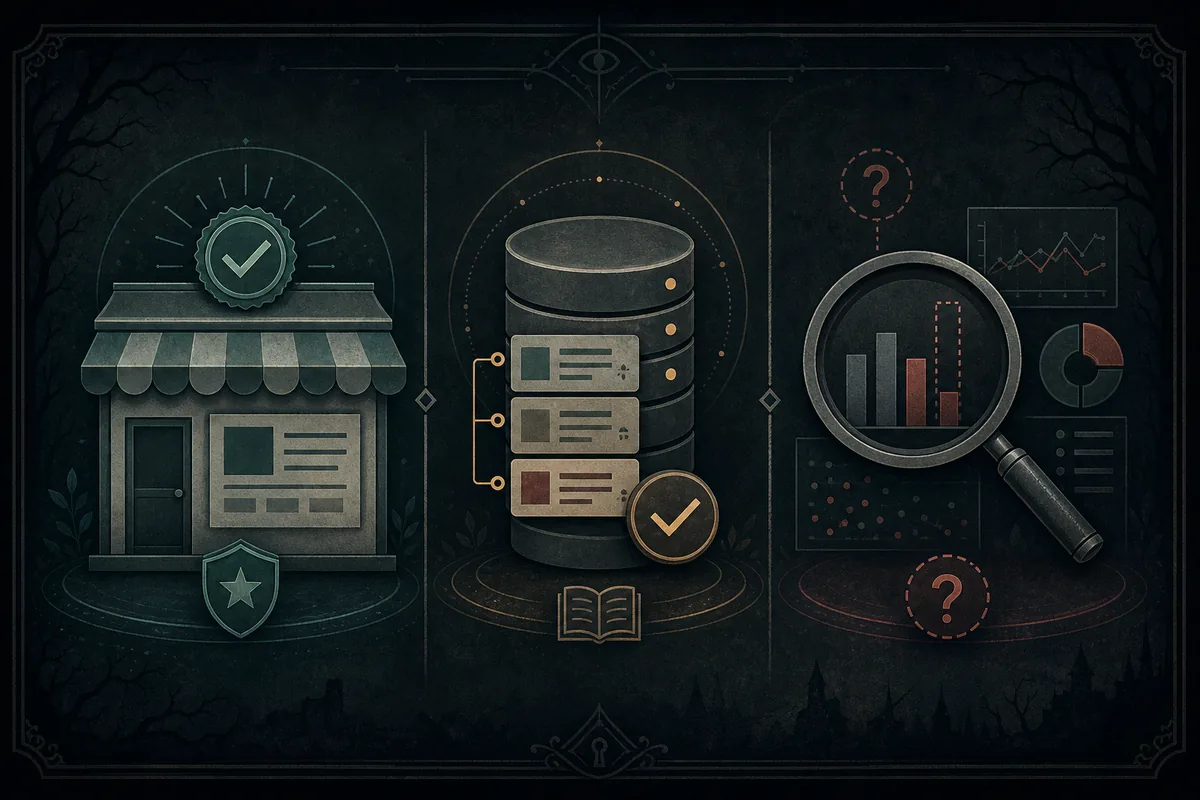
Revenue intent overlaps with store, developer, platform, and system-source questions, but each page keeps a different search boundary.
Use this before purchase, wishlist, install, or price checks.
Open Steam guideVerify KanGames and publisher metadata without mixing it with financial claims.
Open developer pageCheck PC preparation and official requirement context.
Open requirementsUse Steam for live store facts, not private revenue totals.
Open SteamUse SteamDB as a public metadata cross-check, not as accounting proof.
Open SteamDBShort answers for readers checking sales, income, and estimate claims.
There is no public official revenue total for Scary Game 2: The Mad Shepherd. Any exact number should be treated as unverified unless KanGames or another first-party source confirms it.
Only roughly. Public price, discount state, owner-range estimates, and review counts can suggest direction, but they do not produce a precise sales or revenue figure.
No. SteamDB is useful for public app metadata and history, but it does not publish the developer's private revenue ledger.
They can be mentioned as third-party estimates if their assumptions are clear. Do not cite them as official revenue or exact developer income.
No. ScaryGame2.blog links to official Steam context and avoids mirrors, APK claims, cracked builds, keygens, and piracy pages.
Because price, discounts, refunds, regional pricing, bundles, platform fees, and owner-estimate uncertainty can all change the result. A range with source notes is safer than fake precision.